Reputation Management
When it comes to managing your reputation, it is more than just keeping your profiles polished.
It also means monitoring public feedback, addressing questions or criticisms promptly, and maintaining a professional demeanor in all your online interactions.
Below, we’ll look at how to track your public image and use AI tools like ChatGPT to craft courteous, effective responses.
1. Monitoring and Responding to Public Feedback or Queries
-
Builds Trust: Proactive engagement shows that you value your community’s perspectives—whether they’re compliments, questions, or critiques.
-
Aids Improvement: Constructive feedback can help you refine your skills, projects, and overall professional approach.
How to Do It
-
Set Up Alerts
-
Use Google Alerts or similar services to notify you when your name, brand, or project is mentioned.
-
Regularly check comments or direct messages on LinkedIn, GitHub, or personal websites.
-
-
Assess the Tone
- Determine if the feedback is positive, neutral, or negative. This helps you decide on an appropriate response strategy.
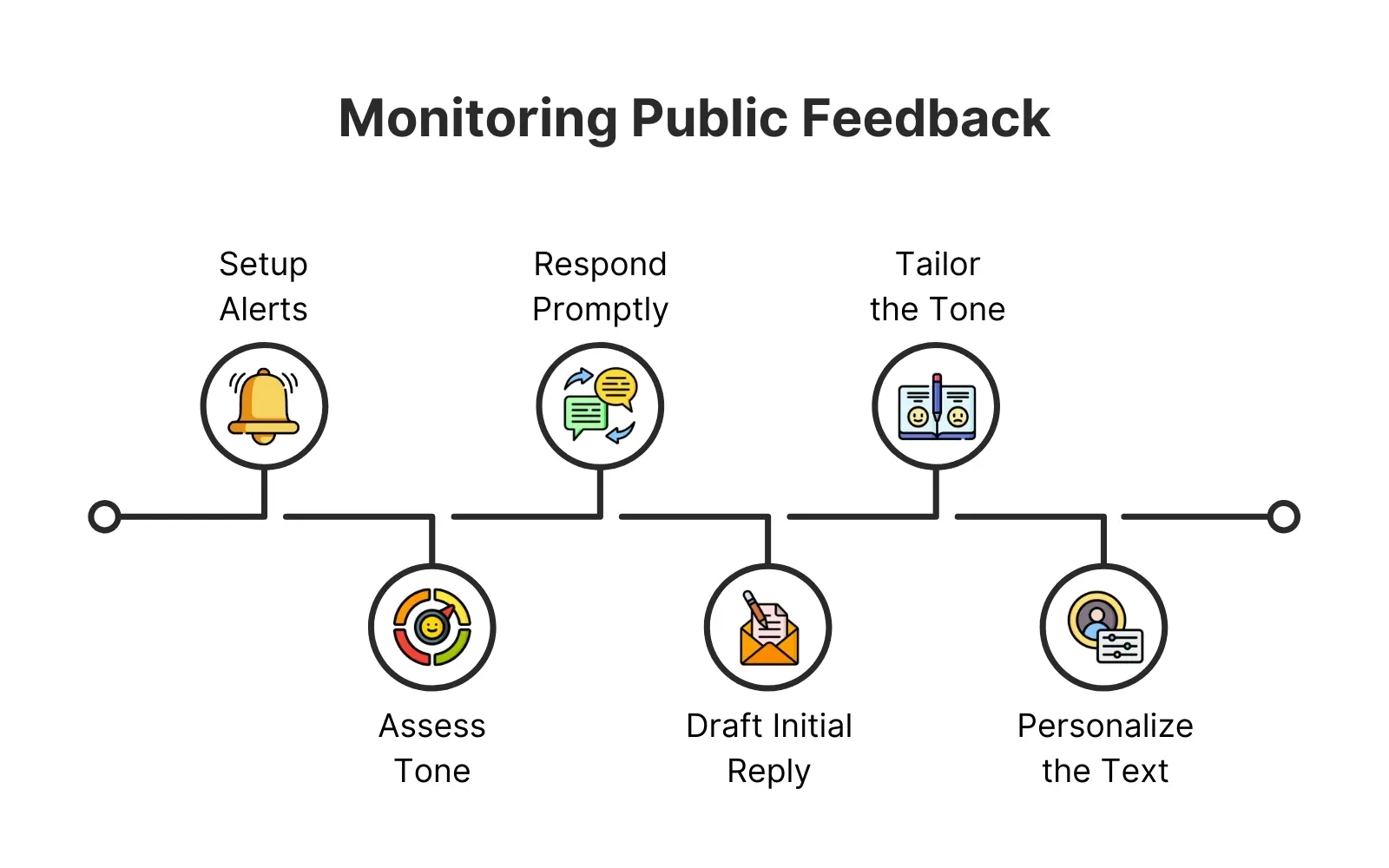
- Respond Promptly
-
A quick, polite reply shows you respect the person’s time.
-
If you need more information to address a concern fully, say so—then follow up with a more detailed response later.
-
2. Using AI to Craft Professional Responses to Reviews or Comments
When feedback is public, how you reply can shape perceptions of your competence and character.
Thoughtful, well-worded responses build credibility and may encourage more interactions in the future.
How to Use AI
-
Draft an Initial Reply
-
Provide ChatGPT with the context of the feedback—whether it’s a positive review, a question, or a complaint.
-
Prompt Example:
“Write a professional response to a user who praised my GitHub project but suggested adding more documentation. Thank them and address their suggestion with a positive tone.”
-
-
Tailor the Tone
-
If the user’s feedback is critical, you might ask ChatGPT to generate a calm, empathetic reply.
-
Prompt Example:
“Help me write a courteous, understanding response to someone who found my e-commerce website’s checkout process confusing. Keep it under 100 words.”
-
-
Personalize the Text
-
Edit the AI’s output to include specific details unique to your situation or voice.
-
Add a personal sign-off or a short anecdote if it feels appropriate.
-
Best Practices for Handling Public Feedback
-
Stay Polite and Appreciative
-
Thank the person for taking the time to comment, even if the feedback is negative.
-
A courteous approach often de-escalates tension and can turn critics into collaborators.
-
-
Be Transparent
-
If you made a mistake, own up to it. Explain how you plan to fix it or what you learned.
-
Genuine accountability can strengthen trust and long-term support.
-
-
Keep It Brief and Clear
- Aim for a response that gets to the heart of the matter quickly. Overly long replies may be overlooked.
-
Document Resolutions
- If you resolve a significant issue, note the solution in a public update or pinned comment. This can serve as a reference for future inquiries.
🤖 Don't fully get this? Learn it with Claude
Stuck on Reputation Management? Open Claude, copy a block below, and it'll teach you this exact concept — visually and interactively.
Build the mental picture, not memorization.
I just read a lesson on **Reputation Management** (Career & Job Search) and want to truly understand it. Explain Reputation Management from first principles using ONE vivid real-world analogy and a visual mental model — draw it as ASCII art or a clear step-by-step diagram — with a concrete example using real numbers. Then ask me one question to check I got the mental picture, and wait for my reply. If you're unsure or a claim isn't standard, say so and reason from first principles instead of guessing.
Socratic — adapts to where you're stuck.
Teach me **Reputation Management** interactively. Ask me ONE guiding question at a time, wait for my answer, and adapt to my confusion — build the idea with me step by step instead of explaining it all at once. If you're unsure or a claim isn't standard, say so and reason from first principles instead of guessing.
Active recall exposes what you missed.
Quiz me on **Reputation Management** with 5 questions, easy to tricky, ONE at a time. Tell me if each answer is right; at the end, explain clearly what I got wrong and why. If you're unsure or a claim isn't standard, say so and reason from first principles instead of guessing.
Intuition + hook + flashcards for long-term memory.
Help me remember **Reputation Management** for the long term: give the one-sentence intuition, a memorable hook/mnemonic, a tiny worked example, and 3 active-recall flashcards (Q -> A). If you're unsure or a claim isn't standard, say so and reason from first principles instead of guessing.