Synchronization Constructs
While dealing with programming that involves multiple tasks or threads running at the same time, it's crucial to manage how these tasks interact and access shared resources. This management is essential to prevent problems such as data corruption or unpredictable behavior in the system. The tools we use to manage this kind of interaction are known as synchronization constructs. These constructs help ensure that various program operations happen in a safe, predictable, and efficient manner.
Synchronization constructs can be thought of as rules or mechanisms that coordinate the execution of concurrent threads in a program. Imagine a scenario where two people are trying to update the same information on a single piece of paper. Without a system in place to manage when and how each person can make their updates, they might make conflicting changes or interfere with each other. Similarly, in computer programs, when multiple threads try to access and modify the same data, synchronization constructs help manage these accesses to avoid conflicts and ensure data integrity.
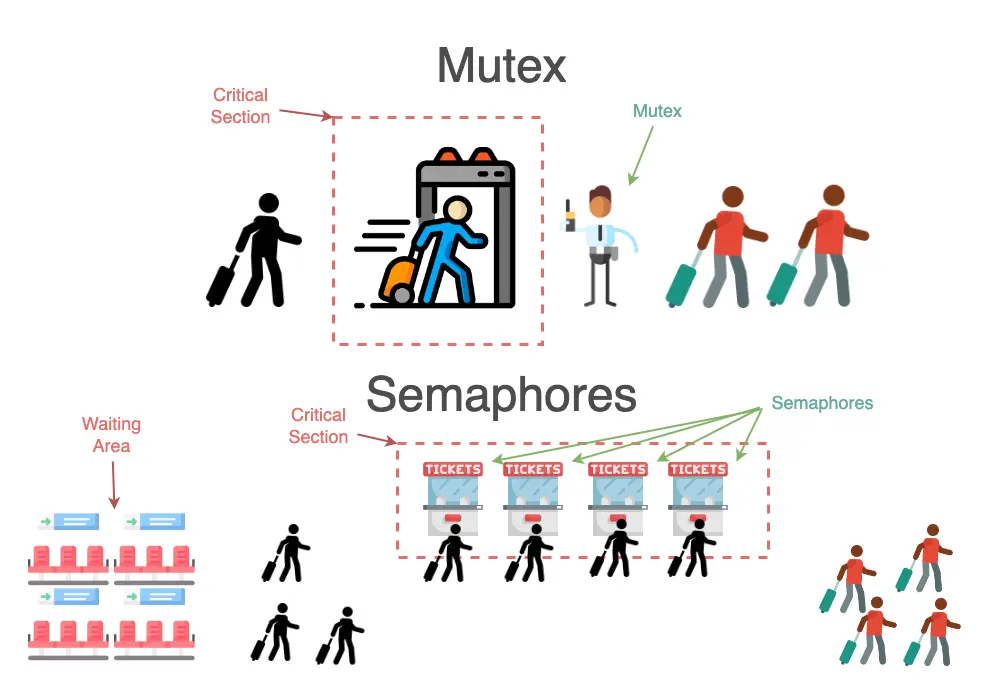
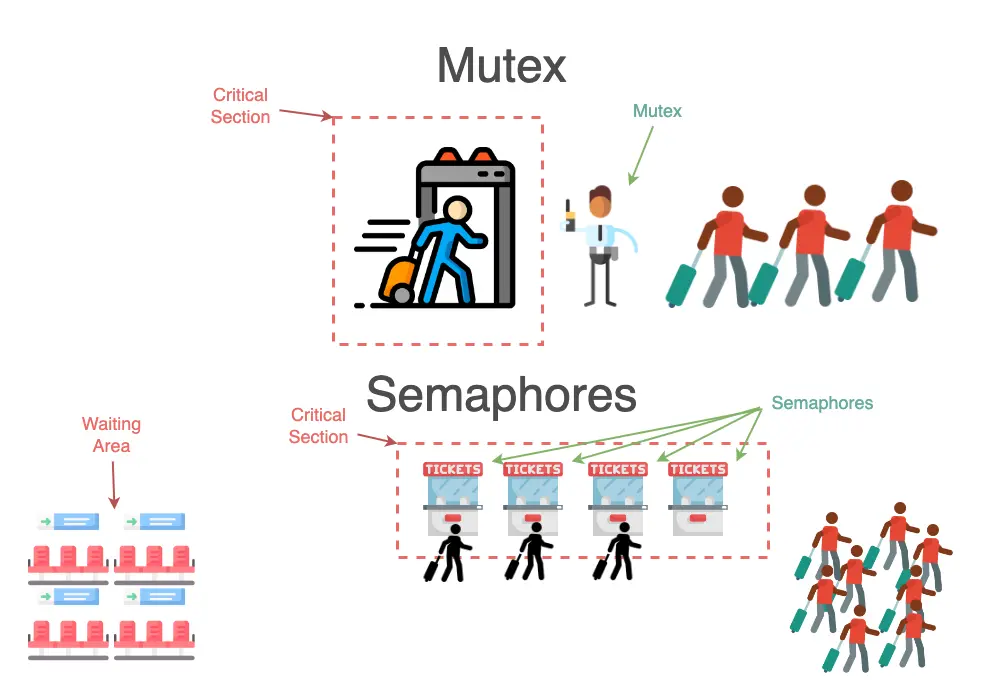
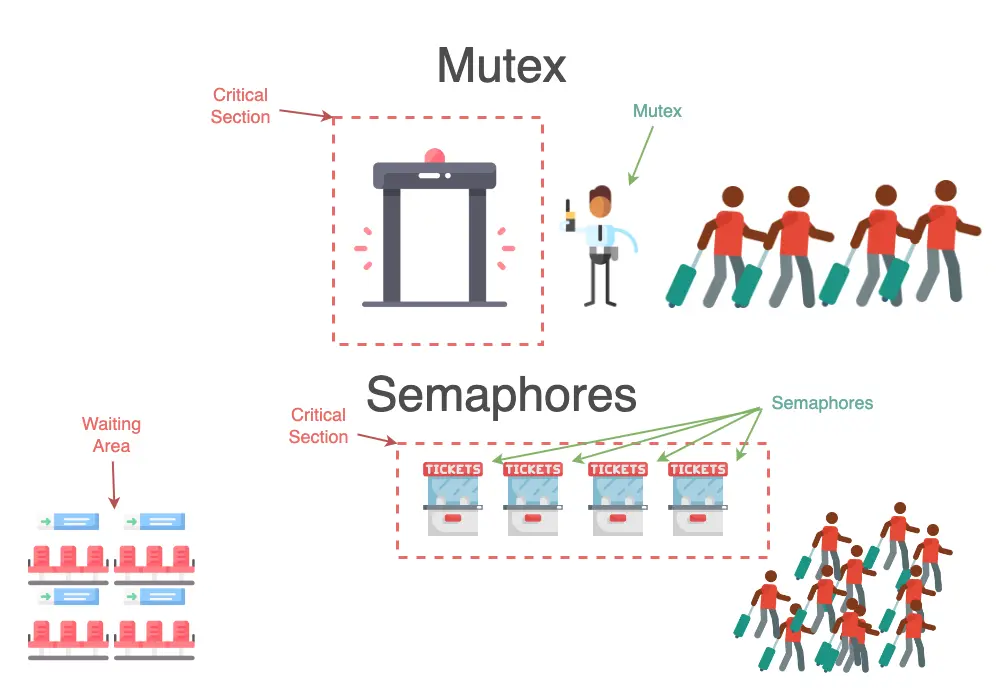
Among the most commonly used synchronization constructs are Mutexes, Read/Write locks, Semaphores, Condition variables, and Barriers. Each of these serves a specific purpose and operates in a unique way to handle different synchronization needs. For example, a Mutex ensures that only one thread can access a particular resource at a time, while a Semaphore can allow a set number of threads to do so. In the following sections, we will look into each of these constructs, explaining how they work and when it's best to use them in your programming projects.
Locks or Mutexes
Locks or Mutexes are tools that help enforce mutual exclusion, ensuring that only one thread can access a shared resource and keeping data safe and concurrent.
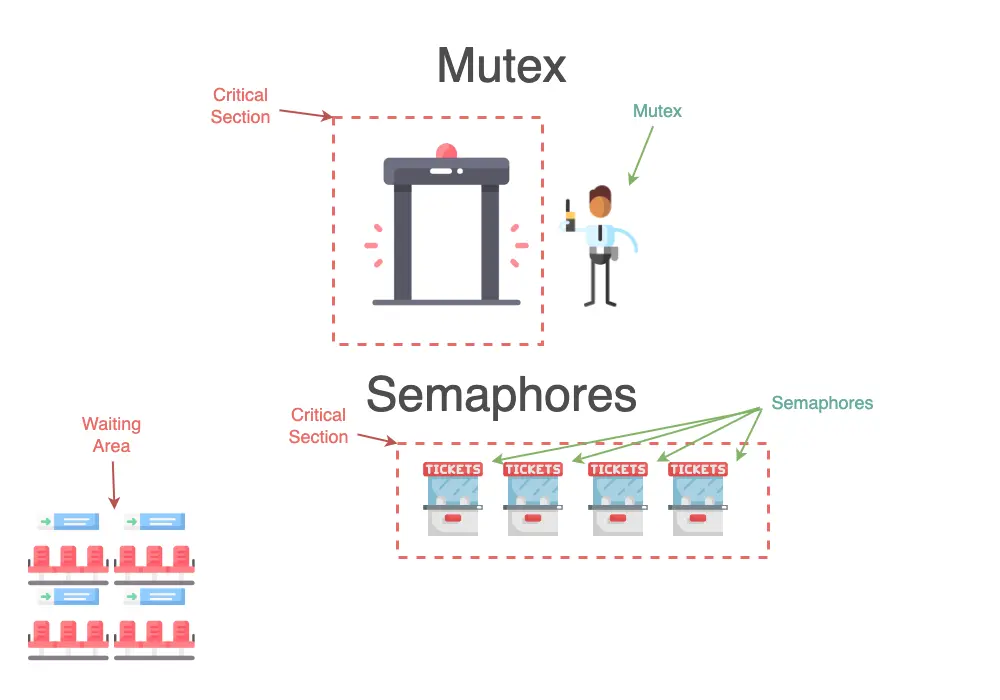
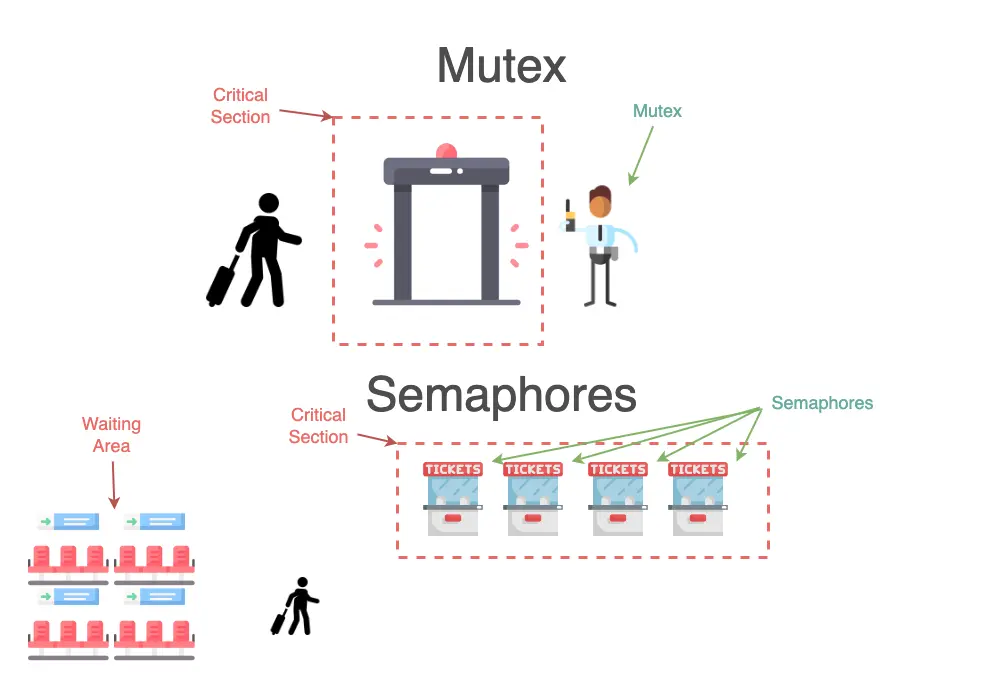
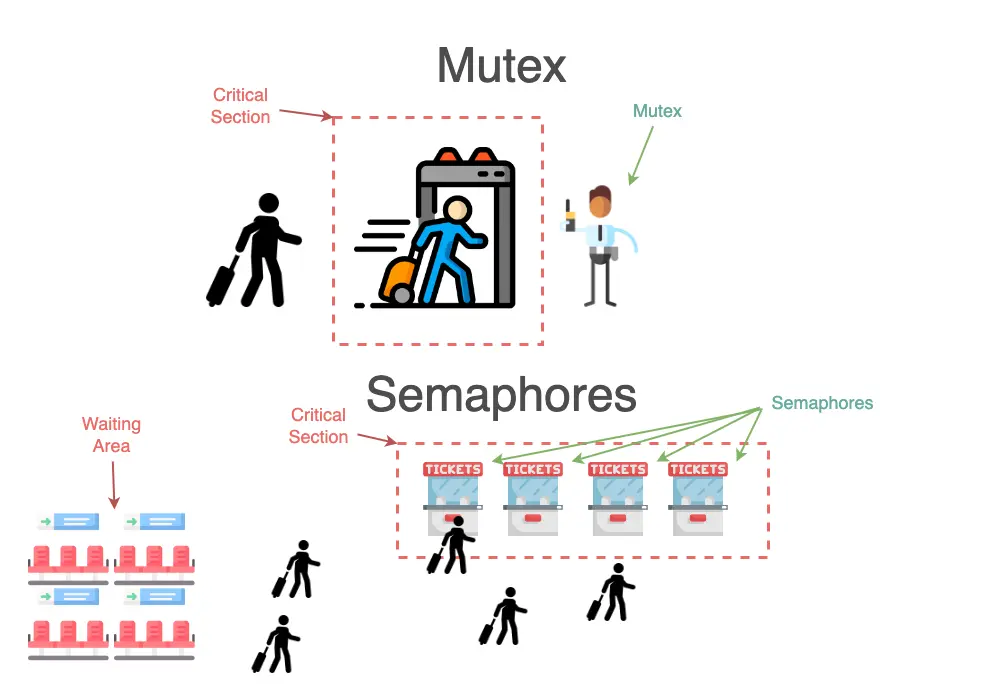
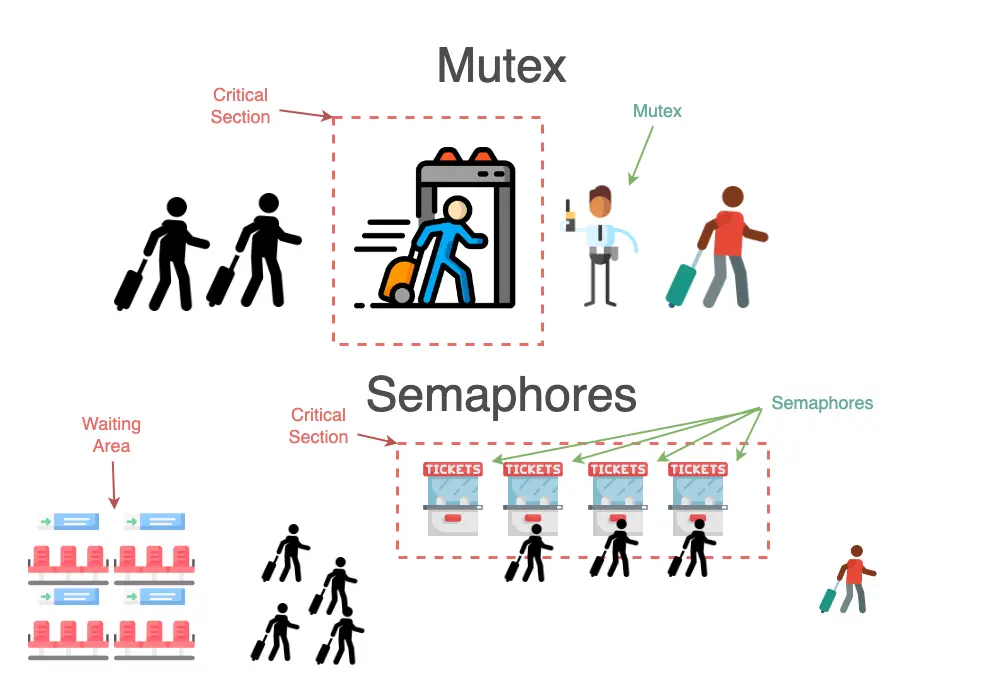
- Locks, often called mutexes (short for mutual exclusion), ensure that only one thread can access a shared resource at a time.
- They provide security to critical sections of code, and prevent multiple threads from concurrently executing these critical sections.
- This synchronization mechanism is essential to protect shared resources from concurrent modifications or enhance our multi-threaded applications' consistency.
Read/Write Locks
Read/Write Locks, or Shared-Exclusive Locks or Reader-Writer Locks are synchronization primitives that allow concurrent read access to a shared resource but require exclusive access for write operations.
Working
- Read Locks: Multiple threads can hold a read lock simultaneously, enabling concurrent read access to the shared resource, as reading doesn't modify the resource and hence doesn't cause data inconsistency.
- Write Locks: Write lock is exclusive. Only one thread can hold a write lock at any given time to ensure safe modification of the shared resource. When a thread holds a write lock, no other thread can acquire a read lock or a write lock, preventing concurrent access during write operation.
Semaphore
Semaphores are synchronization primitives that control access to shared resources, maintaining an integer value to manage permits. They permit multiple threads to access a shared resource, but only up to a predetermined number of permits, ensuring smooth concurrency control in various synchronization contexts.
Types of Semaphores
- Binary Semaphore (Mutex): Utilized for managing access to a single resource, it operates with two states, 0 and 1, ensuring mutual exclusion in critical sections.
- Counting Semaphore: Manages access to multiple resource instances, capable of holding values greater than 1. It limits the number of simultaneous accesses to a resource.
Condition Variables
Condition Variables in the context of threading are synchronization primitives that allow threads to suspend execution until specified conditions are satisfied.
- Wait: A thread waits for a condition to be true. While waiting, the thread is blocked and does not consume CPU resources.
- Notify: Another thread signals, or notifies, that the condition is true. This resumes the execution of one or more waiting threads.
Barriers
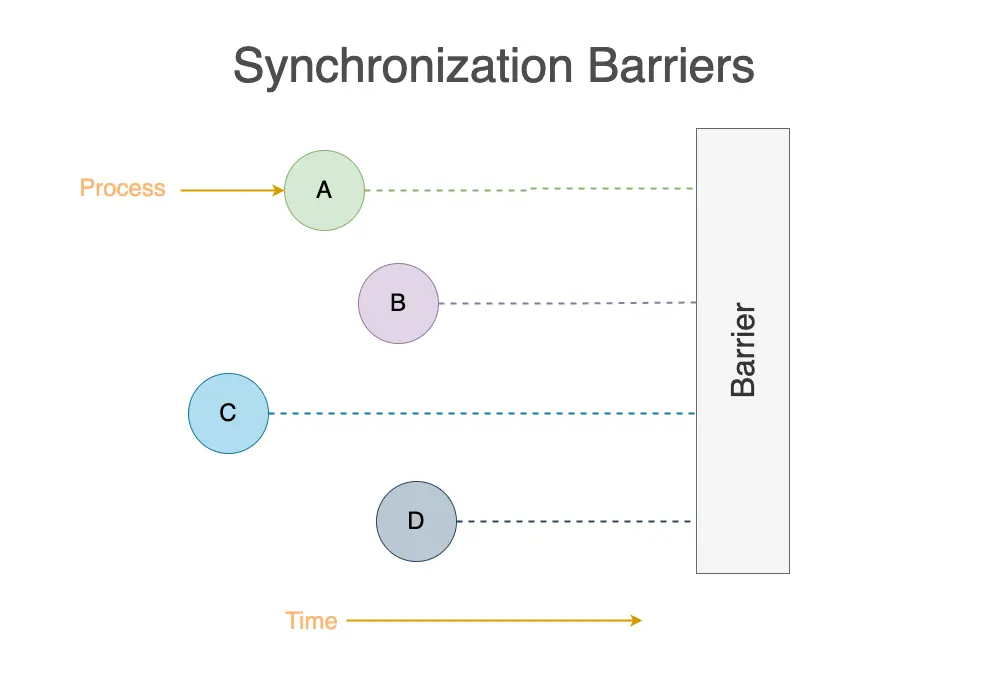
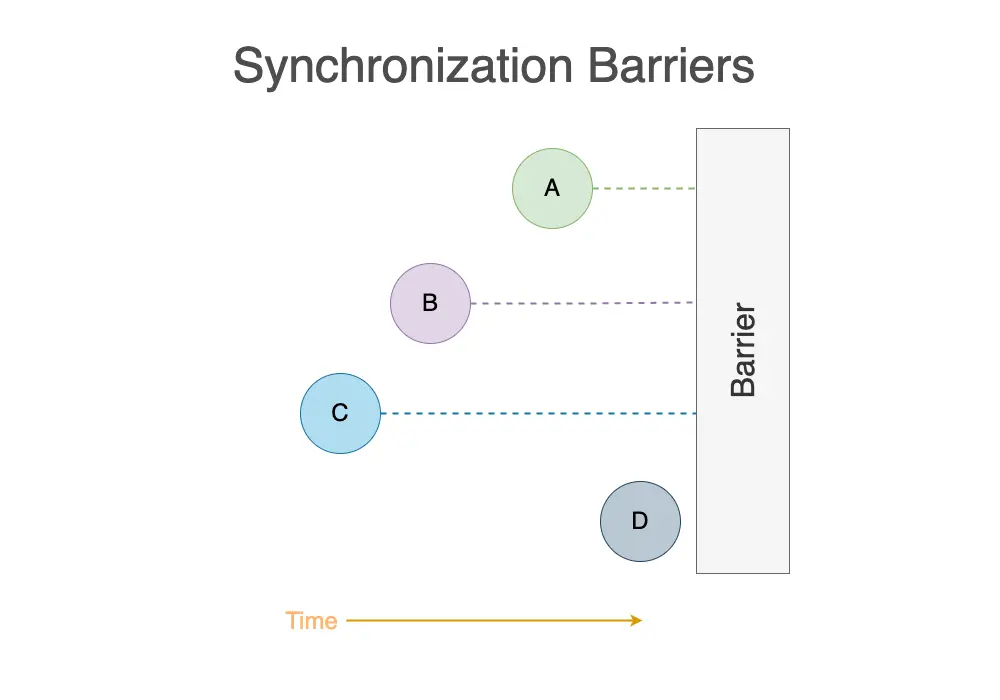
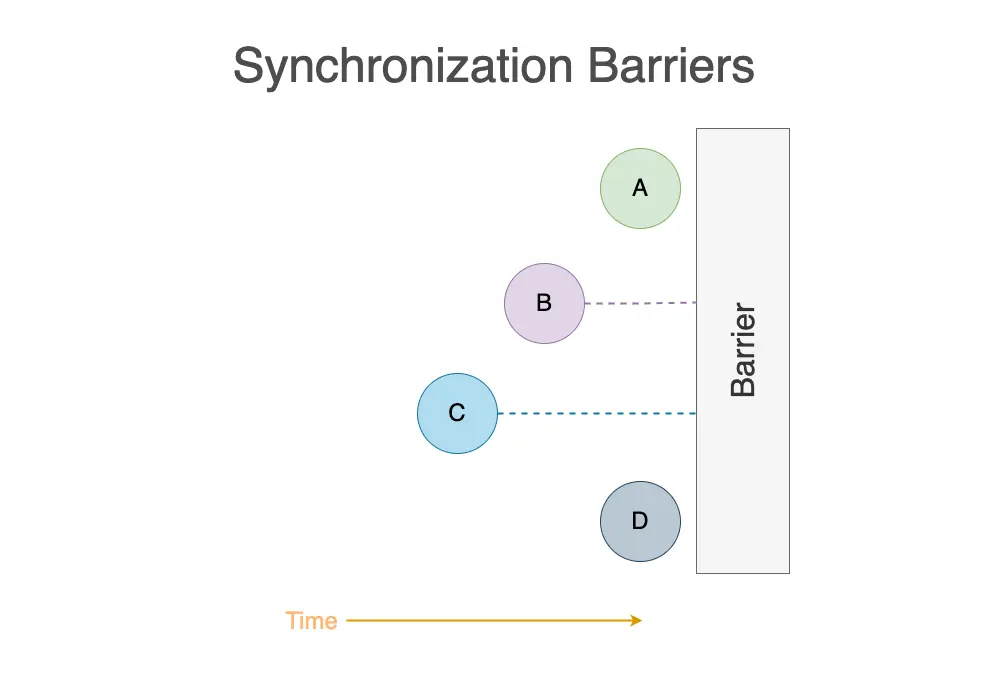
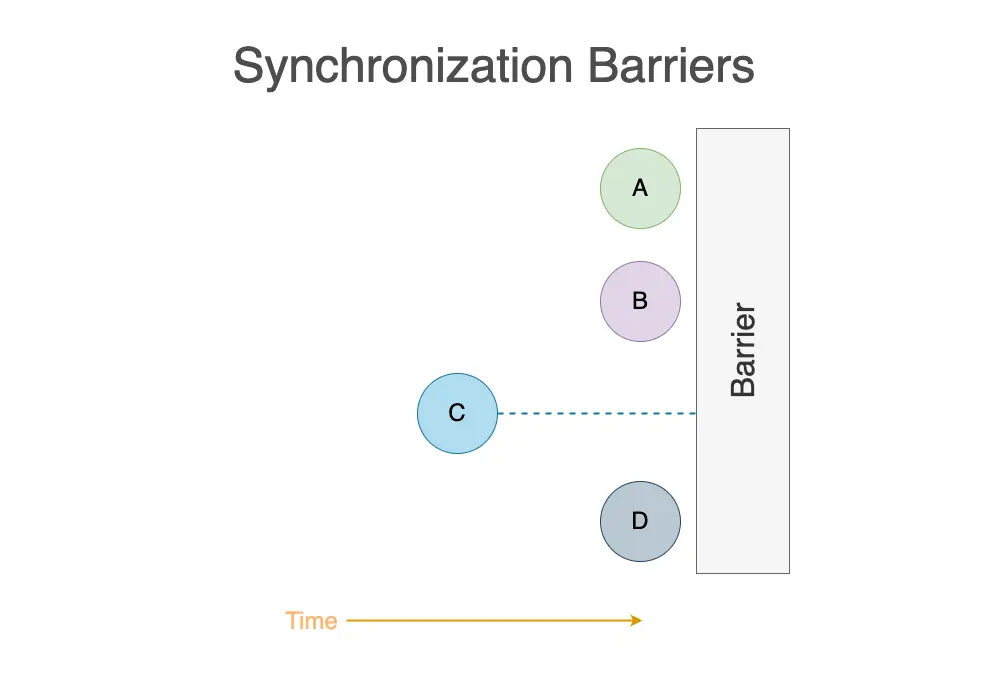
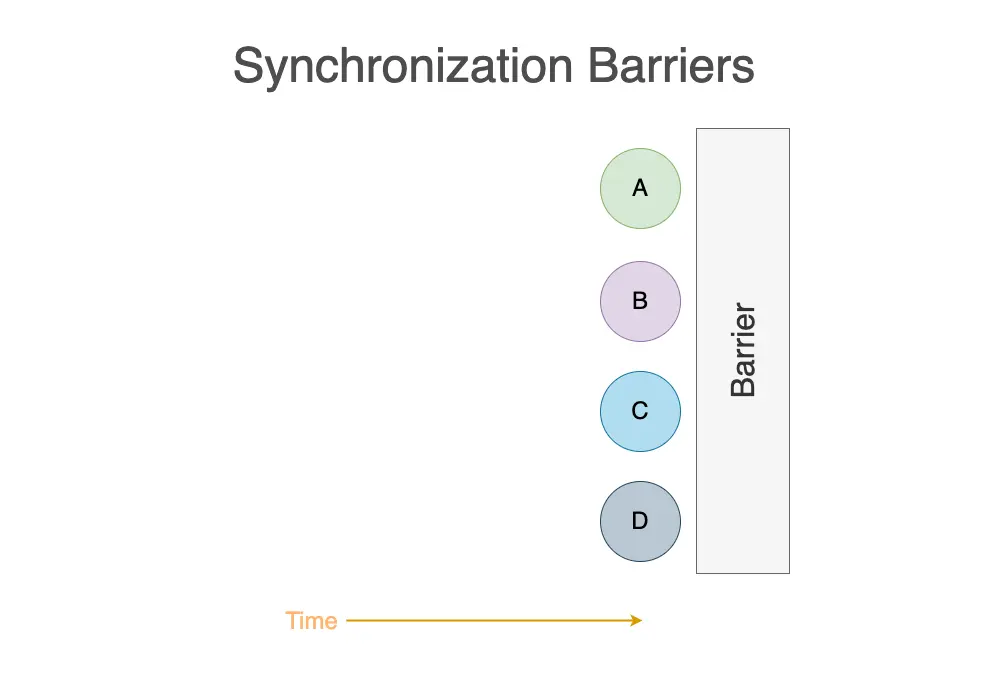
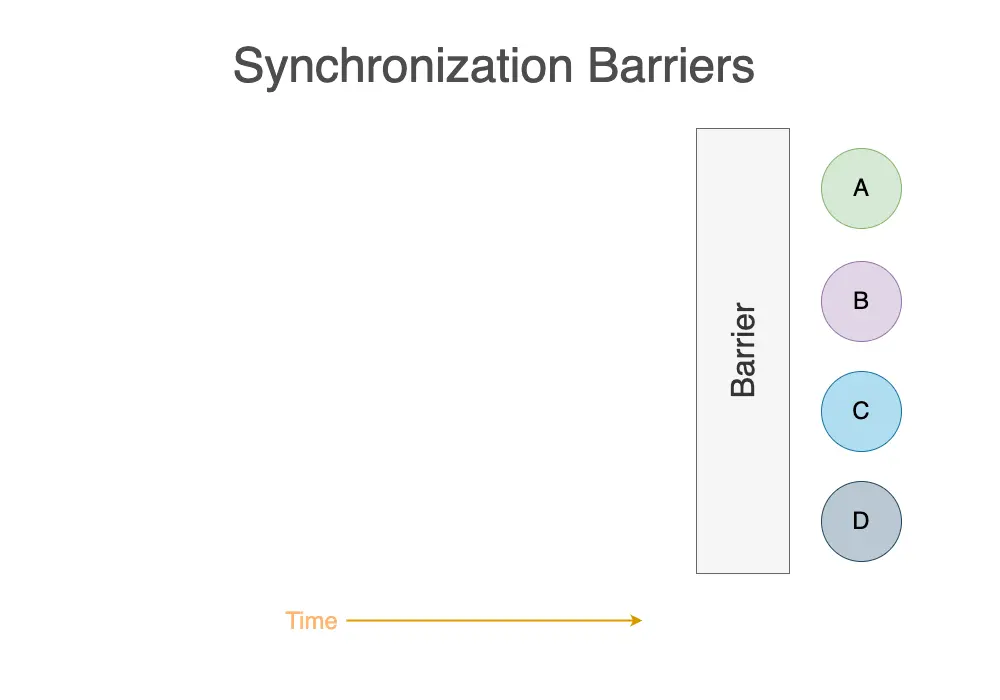
In the context of threading, a barrier is another type of synchronization primitive, used to make multiple threads wait until all threads reach a certain point, after which they can all proceed. It ensures that no thread starts executing the subsequent section until all the threads have reached the barrier.
🤖 Don't fully get this? Learn it with Claude
Stuck on Synchronization Constructs? Open Claude, copy a block below, and it'll teach you this exact concept — visually and interactively.
Build the mental picture, not memorization.
I just read a lesson on **Synchronization Constructs** (Concurrency) and want to truly understand it. Explain Synchronization Constructs from first principles using ONE vivid real-world analogy and a visual mental model — draw it as ASCII art or a clear step-by-step diagram — with a concrete example using real numbers. Then ask me one question to check I got the mental picture, and wait for my reply. If you're unsure or a claim isn't standard, say so and reason from first principles instead of guessing.
Socratic — adapts to where you're stuck.
Teach me **Synchronization Constructs** interactively. Ask me ONE guiding question at a time, wait for my answer, and adapt to my confusion — build the idea with me step by step instead of explaining it all at once. If you're unsure or a claim isn't standard, say so and reason from first principles instead of guessing.
Active recall exposes what you missed.
Quiz me on **Synchronization Constructs** with 5 questions, easy to tricky, ONE at a time. Tell me if each answer is right; at the end, explain clearly what I got wrong and why. If you're unsure or a claim isn't standard, say so and reason from first principles instead of guessing.
Intuition + hook + flashcards for long-term memory.
Help me remember **Synchronization Constructs** for the long term: give the one-sentence intuition, a memorable hook/mnemonic, a tiny worked example, and 3 active-recall flashcards (Q -> A). If you're unsure or a claim isn't standard, say so and reason from first principles instead of guessing.