Problem 6 Odd-Even sort
Overview
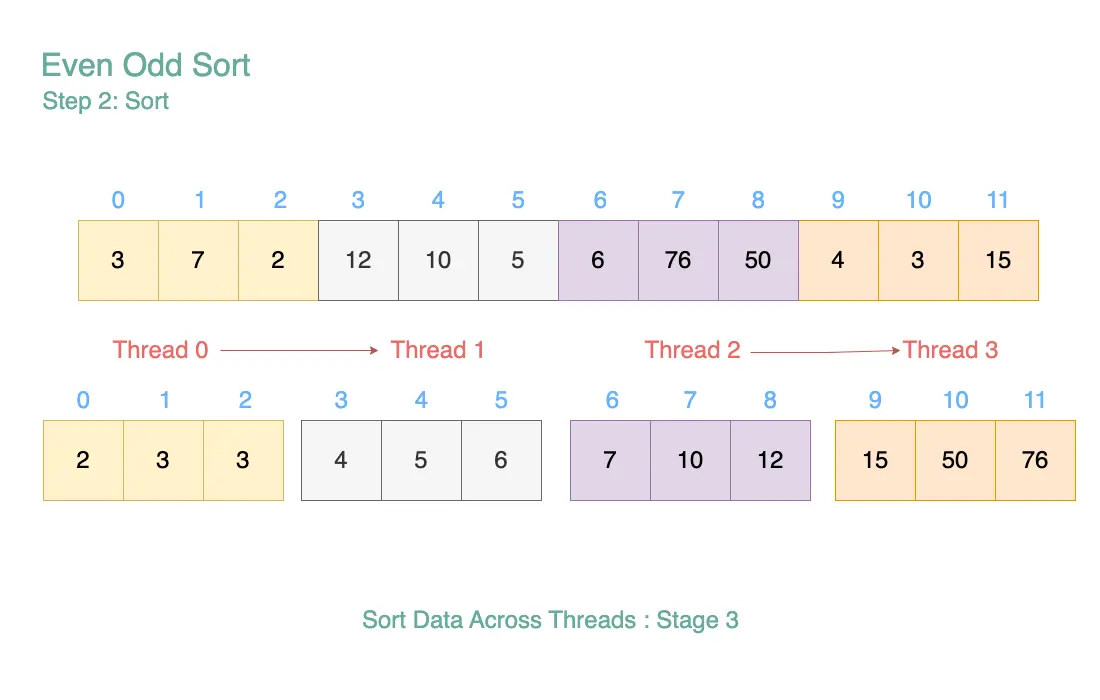
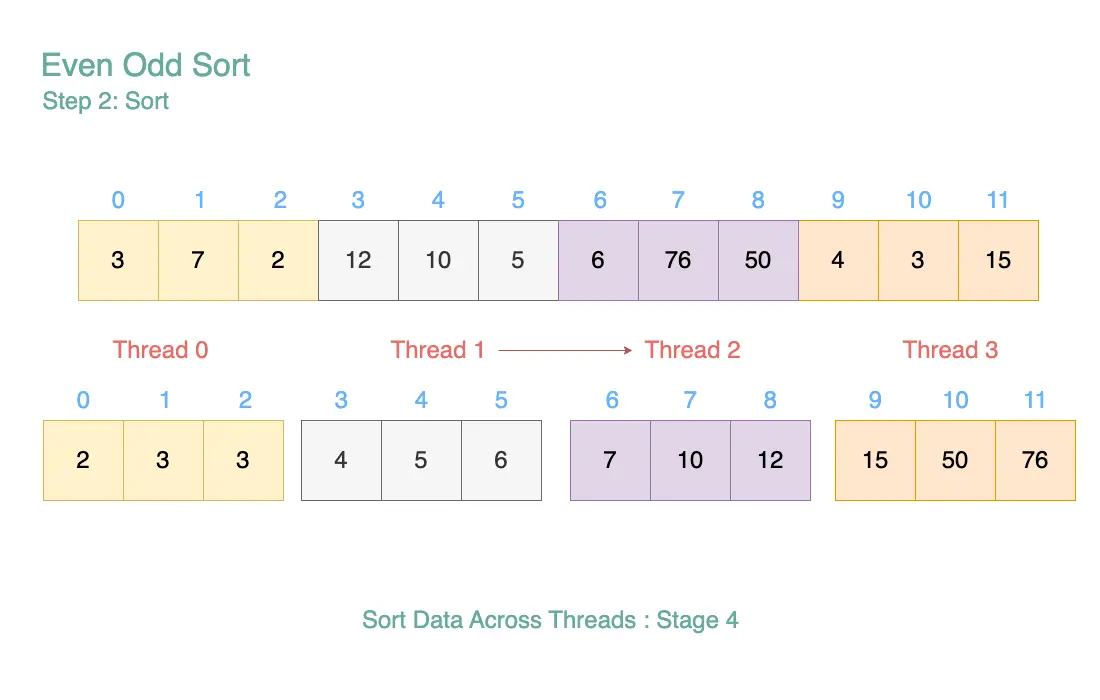
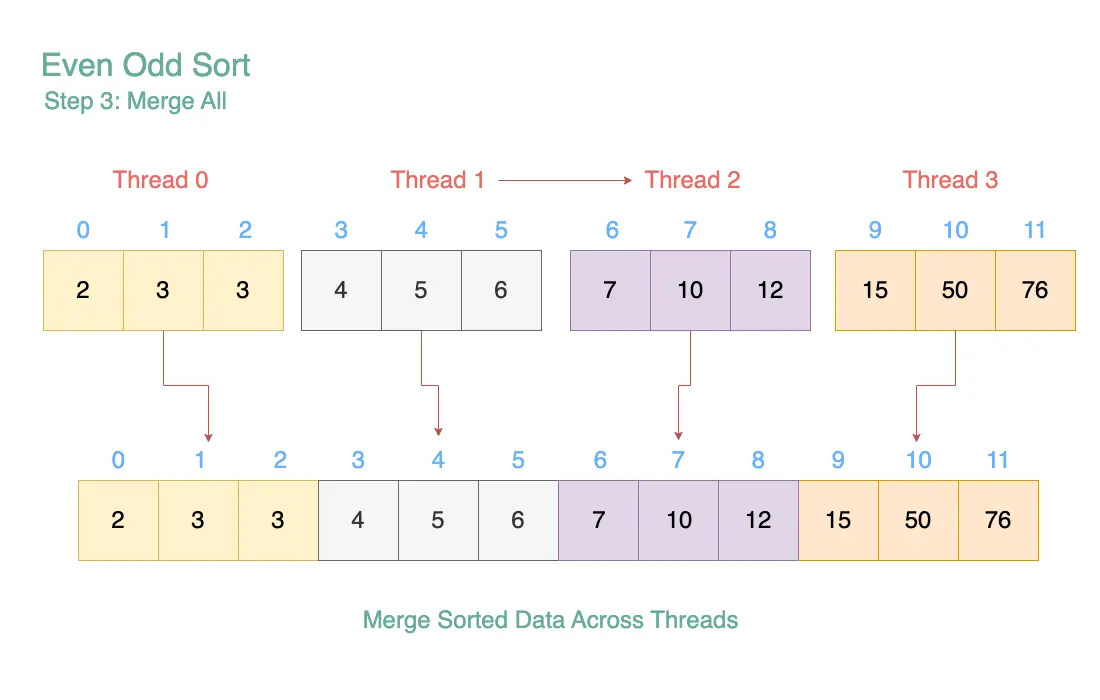
Odd-Even Sort, also known as Brick Sort, is a relatively simple sorting algorithm, inspired by the Bubble Sort algorithm. It operates by concurrently comparing and swapping adjacent pairs of elements in the array to sort the values. The algorithm gets its name from the way it partitions the sorting operation into two phases.
For parallel or multithreaded implementations, the concurrent nature of the Odd-Even Sort becomes especially prominent. Given its inherently parallel structure, multiple pairs can be compared and potentially swapped simultaneously. This makes Odd-Even Sort an interesting choice for parallel computing environments, albeit it's not the most efficient sorting algorithm for larger datasets.
Each of these codes including pseudocode utilizes multithreading to perform odd-even sort. Note that depending on the length of the array and the nature of the data, multithreading might not always give a performance boost due to overheads associated with thread management. The benefits become more apparent with larger datasets.
Pseudocode
DEFINE array with elements [100, 8, 100, 26, 4, 8, 66, 37, 98, 23, 83, 58, 99, 78, 73, 93, 68, 8, 16, 29]
SET NUM_THREADS to 4

INITIALIZE barrier for NUM_THREADS

STRUCTURE ThreadParams WITH
    INTEGER threadId

FUNCTION ThreadSort(ARGUMENTS arg AS POINTER TO ThreadParams) RETURNS NOTHING
    SET threadId to arg->threadId
    SET n to size of array
    FOR phase from 0 to n - 1 DO
        SET begin to (threadId if threadId MOD 2 equals phase MOD 2 else threadId + 1)
        FOR i from begin to n - 2 by NUM_THREADS STEPS DO
            IF array[i] > array[i + 1] THEN
                SWAP array[i] with array[i + 1]
            ENDIF
        ENDFOR
        BARRIER WAIT
    ENDFOR
    RETURN NOTHING
ENDFUNCTION

FUNCTION main() RETURNS INTEGER
    INITIALIZE threads[NUM_THREADS] for storing thread identifiers
    INITIALIZE params[NUM_THREADS] for storing thread parameters

    FOR i from 0 to NUM_THREADS - 1 DO
        SET params[i].threadId to i
        CREATE THREAD with ThreadSort function and params[i] as arguments
        STORE THREAD ID in threads[i]
    ENDFOR

    FOR i from 0 to NUM_THREADS - 1 DO
        JOIN threads[i]
    ENDFOR

    DESTROY barrier

    PRINT "Sorted Array: "
    FOR EACH element IN array DO
        PRINT element
    ENDFOR

    RETURN 0
ENDFUNCTION
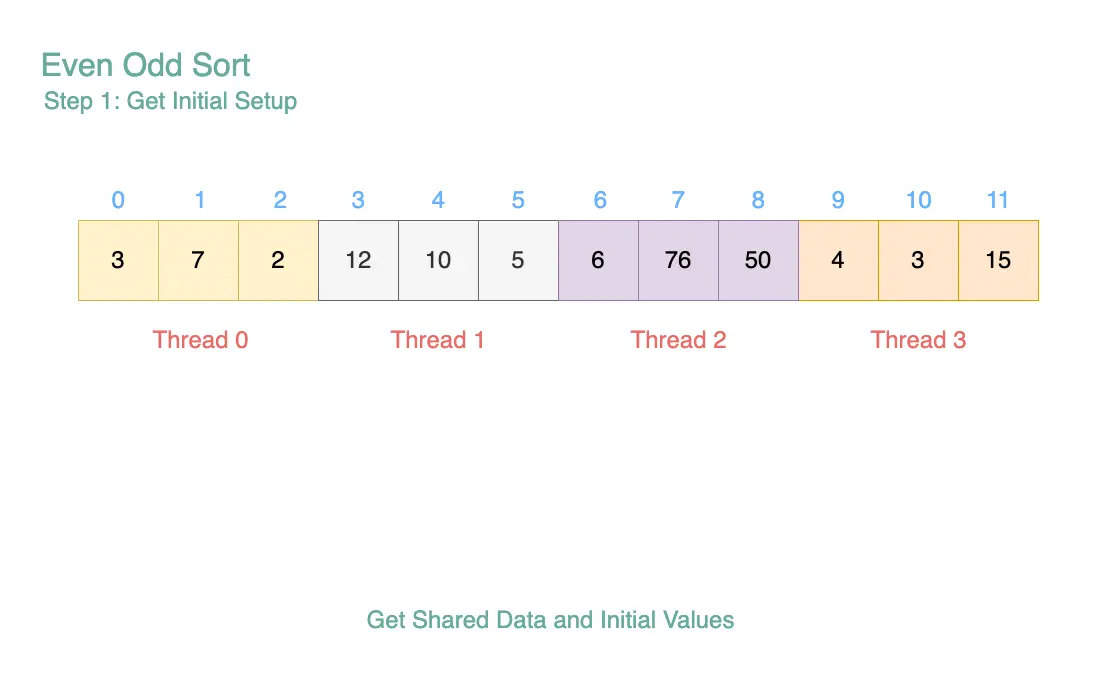
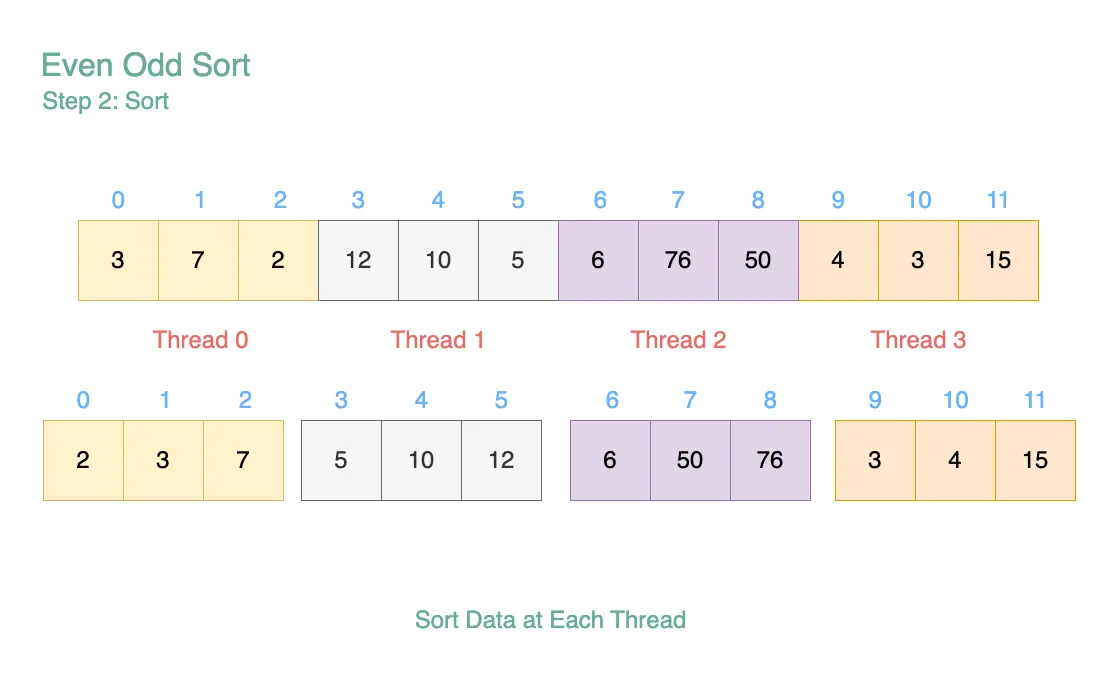
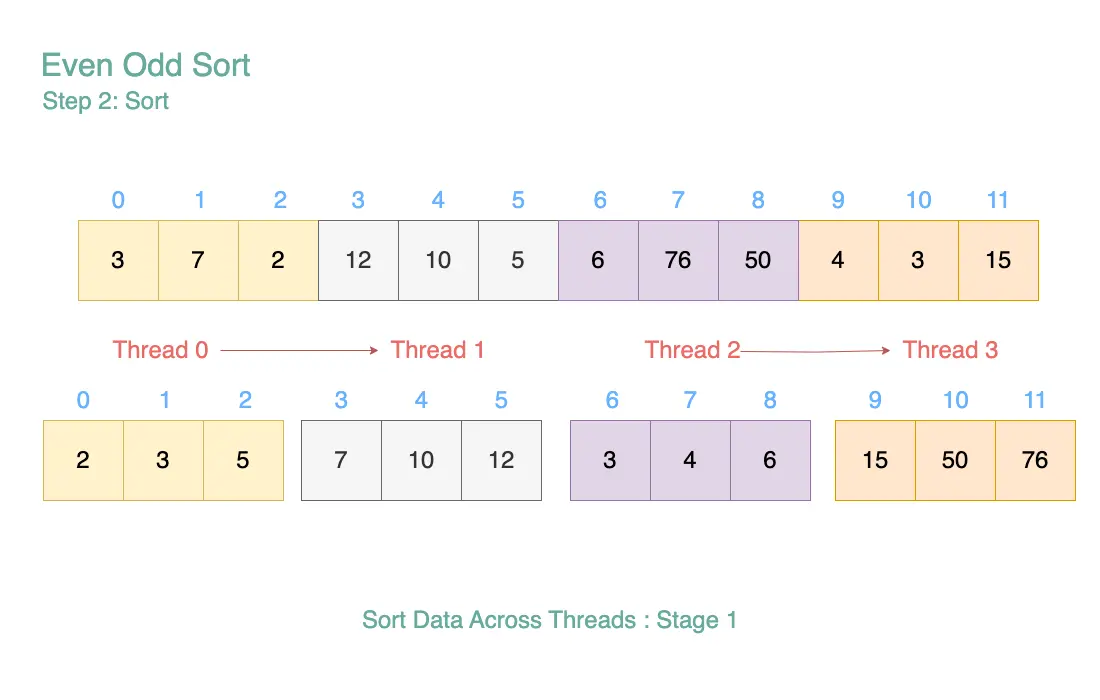
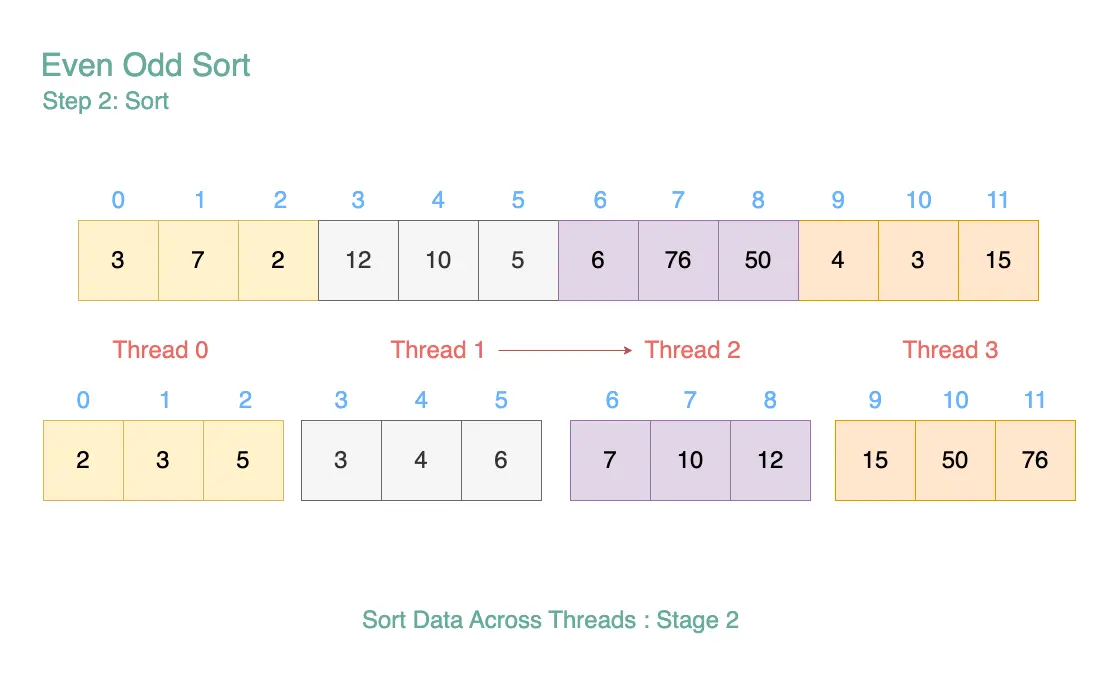
import java.util.Random;
import java.util.concurrent.BrokenBarrierException;
import java.util.concurrent.CyclicBarrier;

public class Solution {

  private static final int NUM_THREADS = 4; // Number of threads to use
  private static int[] array; // Array to be sorted

  // Barrier to synchronize threads in each phase
  private static CyclicBarrier barrier = new CyclicBarrier(NUM_THREADS);

  // Function to perform the Odd-Even Sort on a chunk of the array
  private static void threadSort(int threadId) {
    int n = array.length;
    for (int phase = 0; phase < n; ++phase) {
      // Determine the starting index for this thread
      int begin = (threadId % 2 == phase % 2) ? threadId : threadId + 1;
      // Perform comparisons and swaps
      for (int i = begin; i + 1 < n; i += NUM_THREADS) {
        if (array[i] > array[i + 1]) {
          int temp = array[i];
          array[i] = array[i + 1];
          array[i + 1] = temp;
        }
      }
      // Wait for all threads to finish this phase
      try {
        barrier.await();
      } catch (InterruptedException | BrokenBarrierException e) {
        e.printStackTrace();
      }
    }
  }

  public static void main(String[] args) {
    // Initialize the array with random numbers
    Random rand = new Random();
    int n = 20; // Size of the array
    array = new int[n];
    for (int i = 0; i < n; i++) {
      array[i] = rand.nextInt(100) + 1;
    }

    // Output the original array
    System.out.print("Original Array: ");
    for (int num : array) {
      System.out.print(num + " ");
    }
    System.out.println();

    // Create and start threads for sorting
    Thread[] threads = new Thread[NUM_THREADS];
    for (int i = 0; i < NUM_THREADS; i++) {
      final int threadId = i;
      threads[i] = new Thread(() -> threadSort(threadId));
      threads[i].start();
    }

    // Wait for all threads to complete
    for (Thread thread : threads) {
      try {
        thread.join();
      } catch (InterruptedException e) {
        e.printStackTrace();
      }
    }

    // Output the sorted array
    System.out.print("Sorted Array: ");
    for (int num : array) {
      System.out.print(num + " ");
    }
    System.out.println();
  }
}
These implementations perform parallel Odd-Even Sort with multithreading, dividing the array into chunks and processing them concurrently
🤖 Don't fully get this? Learn it with Claude
Stuck on Problem 6 Odd-Even sort? Open Claude, copy a block below, and it'll teach you this exact concept — visually and interactively.
Progressively stronger hints — you still solve it.
I'm working on the problem **Problem 6 Odd-Even sort** (Concurrency). Give me a HINT LADDER: start with the tiniest nudge, then wait. Only reveal the next, stronger hint when I ask. Do NOT show the full solution unless I type 'show solution'. Keep me doing the thinking. If you're unsure or a claim isn't standard, say so and reason from first principles instead of guessing.
See the technique, not just code.
Explain the optimal approach to **Problem 6 Odd-Even sort** with a VISUAL walkthrough: trace it on a small concrete example using ASCII art / a step-by-step diagram, narrate what changes each step, then give time & space complexity with a one-line derivation. If you're unsure or a claim isn't standard, say so and reason from first principles instead of guessing.
Catch bugs, edge cases, sub-optimality.
I'll paste my solution to **Problem 6 Odd-Even sort**. Review it for correctness, missed edge cases, and time/space complexity, then coach me toward the optimal — don't just rewrite it. Ask me to paste my code now. If you're unsure or a claim isn't standard, say so and reason from first principles instead of guessing.
Lock in recognition with look-alikes.
Give me 2 problems that use the SAME underlying pattern as **Problem 6 Odd-Even sort**. For each, let me attempt first, then review my answer and name the trigger signal that reveals the pattern. If you're unsure or a claim isn't standard, say so and reason from first principles instead of guessing.