Problem 9 Print in Order using multithreading
Overview
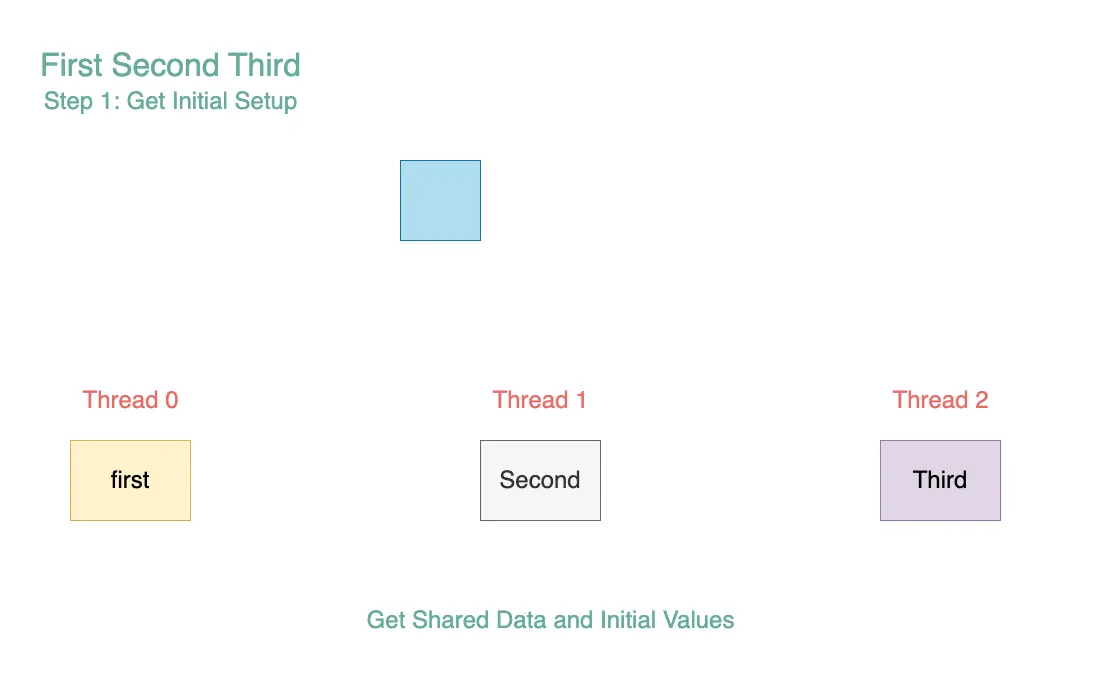
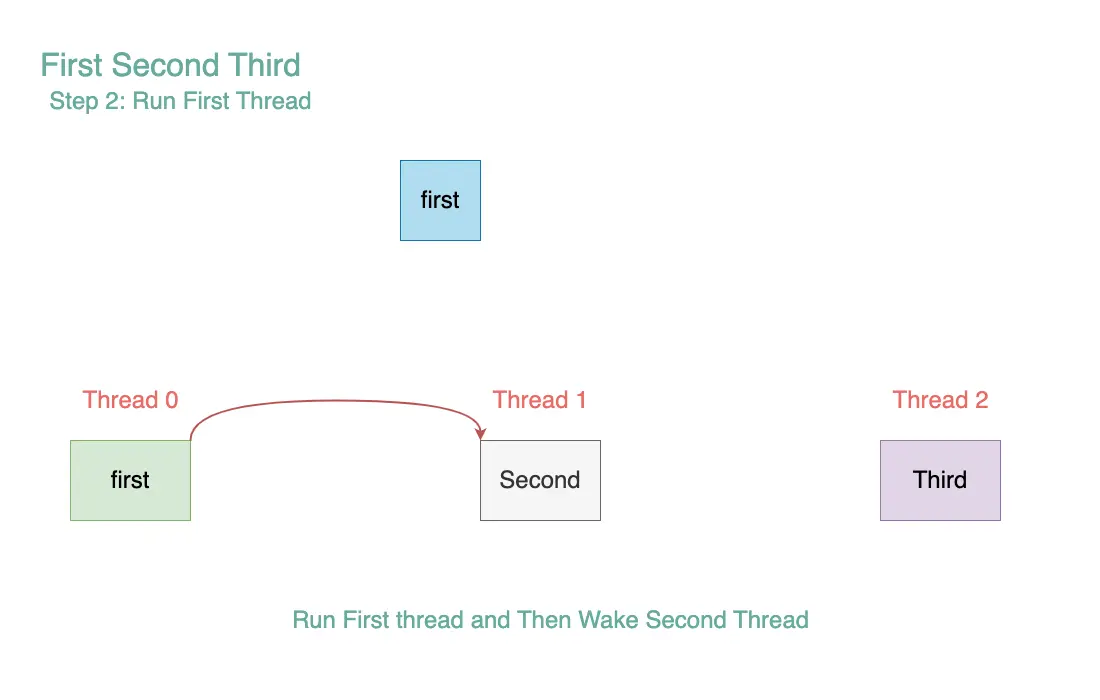
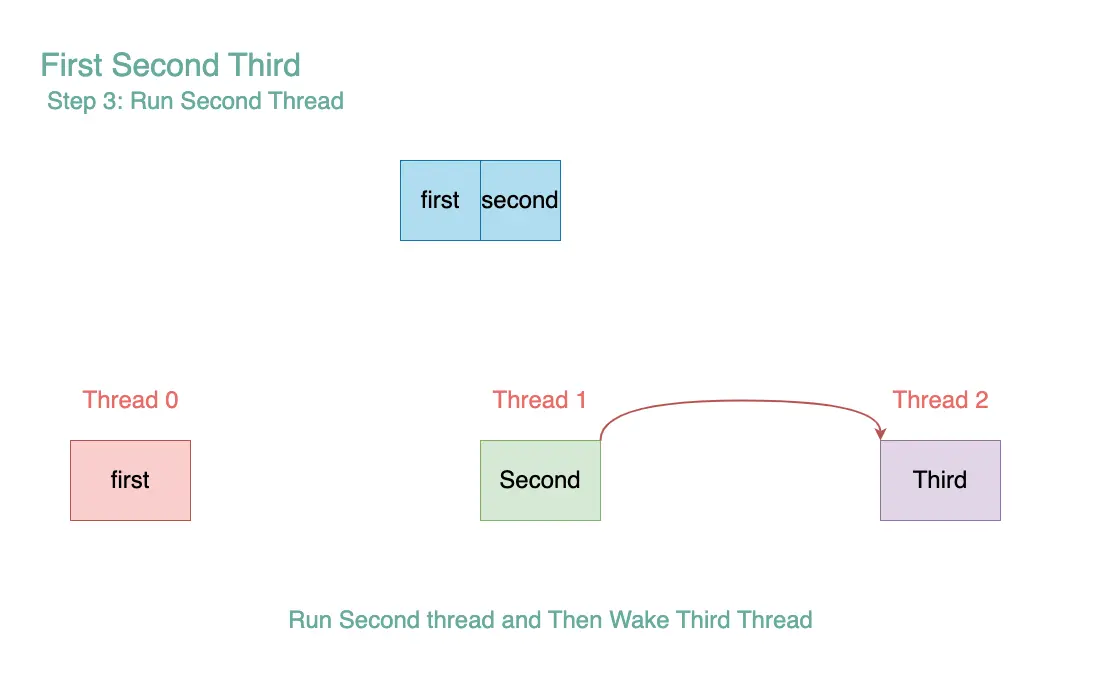
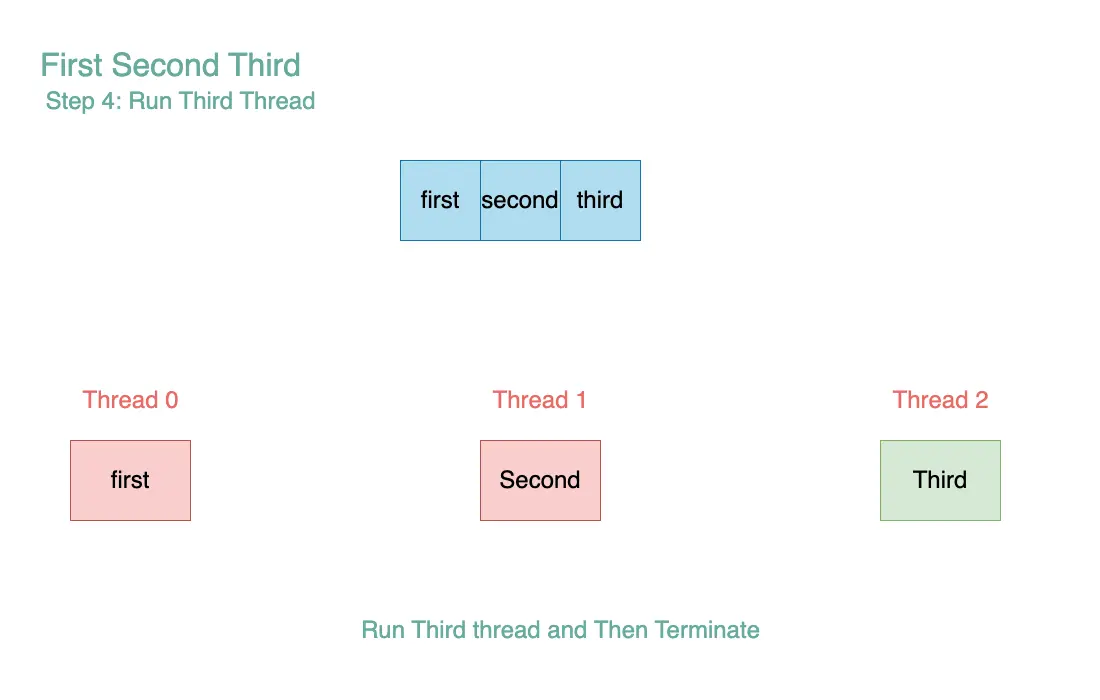
The problem at hand is ensuring the ordered execution of methods across different threads. Essentially, we have three methods: first(), second(), and third(). The objective is to guarantee that irrespective of the order in the threads are triggered or scheduled, first() must execute before second(), and second() must execute before third().
In concurrent programming, it's challenging to ensure the execution order because the operating system can schedule threads in any sequence. This means even if you start thread A (that calls first()) before thread B (that calls second()), there's no guarantee A will execute before B.
To ensure the desired order of execution, we need to use synchronization primitives. These primitives will block or allow threads to proceed based on certain conditions, thus ensuring our desired order.
Step-by-step Algorithm
To solve this problem, we need synchronization mechanisms that will enable one thread to wait until another thread completes its task. For this, we'll use semaphores.
Semaphores are signaling mechanisms. A thread waiting (or sleeping) on a semaphore can be notified to wake up by another thread which signals the semaphore. For our scenario:
- Initialize two semaphores:
semFirstDoneandsemSecondDone. semFirstDonewill be signaled oncefirst()completes. Until then, any thread trying to executesecond()will wait.- Similarly,
semSecondDonewill be signaled oncesecond()completes. Until then, any thread trying to executethird()will wait.
initialize semFirstDone = 0  // This means no thread can pass without a signal
initialize semSecondDone = 0  // Same for this semaphore

function first():
    // execute the 'first' task
    print("first")
    signal semFirstDone  // Inform that the 'first' task is done

function second():
    wait on semFirstDone  // Wait until 'first' is done
    // execute the 'second' task
    print("second")
    signal semSecondDone  // Inform that the 'second' task is done

function third():
    wait on semSecondDone  // Wait until 'second' is done
    // execute the 'third' task
    print("third")
The key insight here is that semFirstDone starts at 0, so any thread calling second() will have to wait until it's signaled. Similarly, semSecondDone ensures the third() function waits for second() to complete. This setup guarantees our desired order of execution, regardless of the order in which threads are started.
import java.util.concurrent.CountDownLatch;

/**
 * This Foo class ensures that its methods are called in a specific order:
 * `first`, followed by `second`, and then `third`.
 */
public class Solution {

  // CountDownLatches are synchronization aids that allow one or more threads to wait
  // until a set of operations being performed in other threads completes.

  // This latch ensures that `second` waits until `first` has finished executing.
  private final CountDownLatch firstDone = new CountDownLatch(1);

  // This latch ensures that `third` waits until `second` has finished executing.
  private final CountDownLatch secondDone = new CountDownLatch(1);

  public Solution() {}

  public void first() {
    // This is the first method, and it can proceed without waiting.
    print("first");
    // Decrement the count of the latch, signaling that this method is done.
    firstDone.countDown();
  }

  public void second() throws InterruptedException {
    // Wait for the first method to complete.
    firstDone.await();
    print("second");
    // Signal that the second method has now completed.
    secondDone.countDown();
  }

  public void third() throws InterruptedException {
    // Wait for the second method to complete.
    secondDone.await();
    print("third");
  }

  private void print(String msg) {
    System.out.print(msg);
  }

  public static void main(String[] args) {
    Solution foo = new Solution();

    // Create the threads.
    Thread threadA = new Thread(() -> {
      try {
        foo.first();
      } catch (Exception e) {
        e.printStackTrace();
      }
    });

    Thread threadB = new Thread(() -> {
      try {
        foo.second();
      } catch (Exception e) {
        e.printStackTrace();
      }
    });

    Thread threadC = new Thread(() -> {
      try {
        foo.third();
      } catch (Exception e) {
        e.printStackTrace();
      }
    });

    // Start the threads.
    // The actual order in which they start and get scheduled is up to the JVM and the OS,
    // but our CountDownLatches ensure they complete in the order: first, second, third.
    threadA.start();
    threadB.start();
    threadC.start();
  }
}
🤖 Don't fully get this? Learn it with Claude
Stuck on Problem 9 Print in Order using multithreading? Open Claude, copy a block below, and it'll teach you this exact concept — visually and interactively.
Progressively stronger hints — you still solve it.
I'm working on the problem **Problem 9 Print in Order using multithreading** (Concurrency). Give me a HINT LADDER: start with the tiniest nudge, then wait. Only reveal the next, stronger hint when I ask. Do NOT show the full solution unless I type 'show solution'. Keep me doing the thinking. If you're unsure or a claim isn't standard, say so and reason from first principles instead of guessing.
See the technique, not just code.
Explain the optimal approach to **Problem 9 Print in Order using multithreading** with a VISUAL walkthrough: trace it on a small concrete example using ASCII art / a step-by-step diagram, narrate what changes each step, then give time & space complexity with a one-line derivation. If you're unsure or a claim isn't standard, say so and reason from first principles instead of guessing.
Catch bugs, edge cases, sub-optimality.
I'll paste my solution to **Problem 9 Print in Order using multithreading**. Review it for correctness, missed edge cases, and time/space complexity, then coach me toward the optimal — don't just rewrite it. Ask me to paste my code now. If you're unsure or a claim isn't standard, say so and reason from first principles instead of guessing.
Lock in recognition with look-alikes.
Give me 2 problems that use the SAME underlying pattern as **Problem 9 Print in Order using multithreading**. For each, let me attempt first, then review my answer and name the trigger signal that reveals the pattern. If you're unsure or a claim isn't standard, say so and reason from first principles instead of guessing.